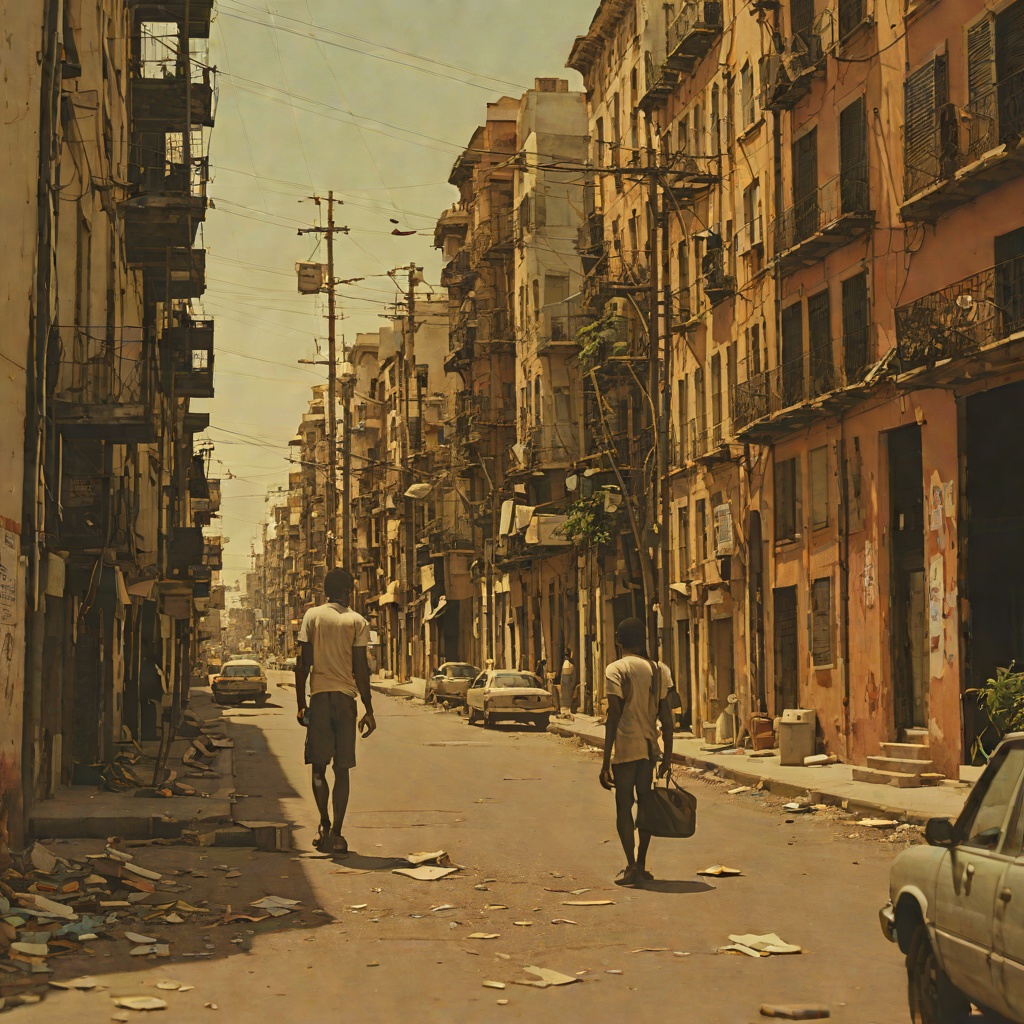
film language is an oxymoron
City of Godfilm language is an oxymoron is the novel’s defining formulation for the difference between cinematic communication and literary thought. Film can convey an immense amount before anyone speaks, but precisely because it compresses experience into visible and audible signs, it does not function like language in the full literary sense. The concept therefore links two arguments: movies communicate through embodied, pre-verbal intuition, and the expanding movie culture increasingly consumes reality itself as an image.
Definition and Medium
The argument begins with the history of silent cinema. Early filmmakers learned to convey meaning without spoken language, while title cards merely fixed or specified an intelligence that the audience had already received nonverbally. A young couple on a porch swing, a man removing a ring from his vest pocket, and his gaze into the woman’s eyes can establish a proposal before a card announces the question. The card adds precision; it does not create the scene’s essential meaning.
The same principle remains operative in sound film. Dialogue often supplies only the final touch of specificity, whereas the decisive information has already been established by the illuminated set, the camera’s position, the actors’ costumes, their styled hair, their facial expressions, and their bodily attitudes. Clothing and grooming silently indicate economic class, education, age, social status, virtue, or its absence. The scene arrives as a coordinated sensory arrangement whose implications the viewer infers before verbal explanation begins.
Film and Literary Thought
The concept becomes sharper through its contrast with fiction. Literary experience extends an impression into discourse: nouns, verbs, objects, and syntactical relations allow prose to flower into thought. Fiction can move inside and outside consciousness, stop, resume, and make mental action as consequential as physical action. It is not inherently governed by the clock of visible behavior.
Film, by contrast, is described as imploding discourse and shrinking it into the compact meaning of a preverbal impression, intuition, or understanding. The viewer receives what is shown rather than having to work it out through an articulated chain of language. Filmgoing is consequently an act of inference, but the inference is generated by appearances, behavior, sound, and temporal movement rather than by the explicit development of propositions. Films tend toward linear action and simple moral reasoning: close-ups, car drive-ups, places, chases, and explosions replace the novel’s capacity to dwell in the dark complexity of consciousness.
This distinction also explains the apparent paradox of film criticism. Even a dreary or stupid movie can provoke a long, lucid critical response. The critic subjects a largely pre-verbal, or possibly post-literary, experience to syntactical thought and thereby defends verbal culture against the medium being discussed. The more fully the critic articulates the film, the more clearly the exchange exposes the gap between cinematic immediacy and literary reflection.
Film History and Self-Reference
The concept includes a historical diagnosis of changing cinematic practice. Films of the 1930s and 1940s, including action films, swashbucklers, and noirs, were more talkative because sound cinema drew heavily on theater and books. Later films increasingly worked from previous films and became genre-referential. Their meanings depended less on extended dialogue and more on the viewer’s recognition of established visual and narrative conventions.
That development makes cinema appear increasingly self-contained. The movie no longer simply records or adapts a world; it draws on an accumulated archive of other movies, repeating and transforming their gestures, types, rhythms, and moral simplifications. Film’s apparent language is therefore a paradoxical product of convention without the reflective freedom ordinarily associated with language. It is a system of recognizable signs, yet its force remains rooted in showing rather than in reasoning through words.
Movies as a Life Form
The claim about film language belongs to a still larger speculation that movies are not merely cultural products. Movies are said to have multiplied through theaters, television, cable, tape, and discs until they are everywhere, forming a population explosion. They persuade people that they are expressions of human culture with individual identities and genres, while possibly functioning as creatures with their own intelligence and organization.
In this speculative account, movies first forced humanity to invent them and provide the material of their existence, then began feeding on human feelings, thoughts, and intellects. Their appetite is compared to a tapeworm living in the guts of the earth, using up cities, countryside, seas, and mountains. The image expands the argument from aesthetics to ontology: cinema does not merely represent the world but progressively incorporates the world into an enormous moving-image system.
The imagined future is one in which every inch of the planet has been put on film. The world flattens into an enormous reel; even the night sky becomes a screen. Life ceases to be simultaneous and becomes sequential, one story after another, as though the DNA of every living thing had been extended along one strand, one byte at a time, toward infinity. The medium’s pre-verbal immediacy thus culminates in total capture: what cannot be converted into film risks becoming invisible to the culture that film dominates.
Cultural Consequences
The concept also clarifies the novel’s criticism of the social hierarchy surrounding movies. At a lifetime-honor ceremony in the Waldorf’s grand ballroom, actors praise the celebrated director for teaching them, drawing out their best qualities, and changing their lives. Such praise is unsurprising because directors distribute acting jobs. More revealing is the appearance of writers who praise the director’s superior artistry for transforming their modest books and screenplays into movie magic.
That spectacle is presented as more than ordinary professional gratitude. It becomes a ritual denigration of the literary, especially because literary figures perform it themselves. The softly lit, chandeliered, black-tie ballroom turns the subordination of books to movies into a sacrament of movie culture. The ceremony enacts the very hierarchy that the concept names: literary discourse supplies material, while cinema receives cultural authority as the supposedly more immediate and powerful form.
film language is an oxymoron therefore does not simply deny that films communicate. It identifies the peculiar kind of communication film performs: rapid, bodily, visual, musical, behavior-centered, and inferential, but resistant to the inward temporal freedom of literary language. Its final force lies in the tension between those two descriptions. Film seems to speak, yet it may be most powerful precisely where it replaces speech; it seems to mirror human culture, yet it increasingly behaves like an independent species that converts culture, landscape, and lived time into its own continuous image.